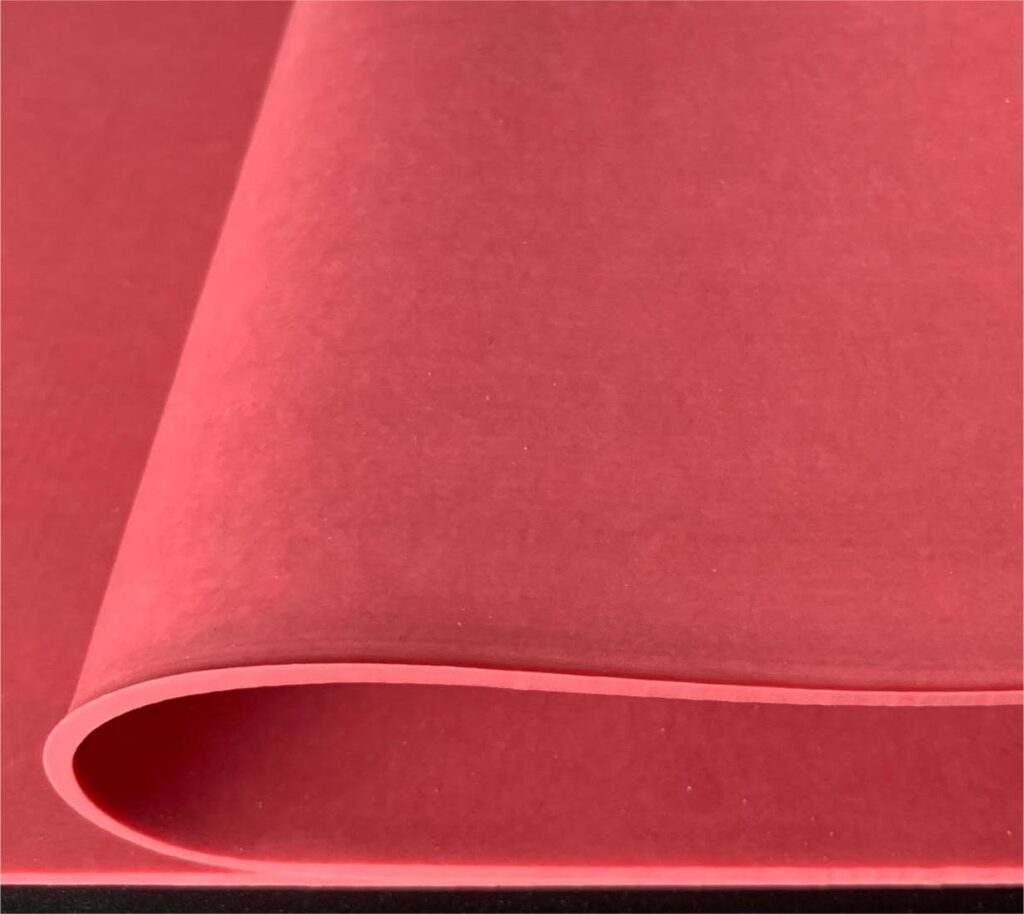
A conveyor skirt is the cheapest rubber on the line and the most expensive to get wrong. The strip is a few metres of sheet; a seal that fails at the transfer point costs spilled material, dust, cleanup labour and eventually the belt cover it was meant to protect.
That mismatch is why skirting rubber is specified so badly. Buyers treat it as a wear liner and order the hardest sheet they can find. Skirting is not a liner. It is a moving seal riding against a belt, and the properties that make a good liner often make a bad seal.
What a sealing failure actually costs
Start with the bill, not the rubber. When the skirt edge loses contact with the belt, material leaves the loading zone. The cost is rarely one line:
- Spillage and cleanup. Fines and lumps drop under the conveyor and are shovelled or washed back, shift after shift. That is labour, not a line item on the rubber order.
- Dust. Airborne fines settle on idlers, pulleys, walkways and motors; respirable dust becomes a health and housekeeping problem rather than a maintenance one.
- Belt damage. Material trapped between a hardened skirt and a moving belt grinds the top cover. Ignored long enough, a skirting job turns into a belt repair.
- Lost throughput. A transfer point that plugs or spills is stopped, cleaned and restarted. The downtime dwarfs the strip.
Transfer-point sealing is well documented, and the Conveyor Equipment Manufacturers Association publishes practical guidance on skirt and sealing practice worth reading before you write a specification. Its recurring point: containment is a system, namely chute, belt support, skirt and clamp, not a single strip of rubber.
Skirting is a seal, not a wear liner
A chute liner absorbs impact or resists sliding abrasion. A skirt stays in light, continuous contact with a belt that is moving, loaded and never perfectly flat. Different jobs.
Three demands pull against each other:
- Seal. The edge must be compliant enough to follow belt wander, splices and sag between idlers. A stiff edge bridges those low spots and opens a gap.
- Protect the belt. The skirt touches the belt for the whole transfer point. Too hard, or loaded with embedded grit, and it abrades the cover instead of containing the load.
- Last. The edge is in sliding contact, so it wears. A softer compound seals better and wears sooner.
The usual failure is buying for number three alone. A hard strip wins on abrasion loss and loses on the other two: it gaps, it leaks, it grinds the belt. The cost lands in the cleanup and belt budgets, where nobody connects it back to the rubber order.
Choosing a compound: the three families
Hardness is quoted on the Shore A scale and tested by the ASTM D2240 durometer method. State the method in your enquiry, because “60 durometer” alone is not a specification you can reject against, and work to a realistic production tolerance of ±5 Shore A.
Our sheet programme runs three families:
- Natural rubber, 65 ± 5 Shore A — the default for skirt sealing. Resilient enough to follow the belt, soft enough not to gouge the cover, with cut and tear resistance for a gritty loading zone.
- Cast polyurethane, 85 ± 5 Shore A — for severe, dry sliding abrasion where the belt is well supported and the gap tightly controlled. It resists being ground away far better than rubber, and is correspondingly more sensitive to temperature and operating conditions than natural rubber, so it needs a conversation rather than a straight substitution. Because it is harder, confirm your belt and clamp arrangement will tolerate it first.
- Economy gum rubber, 45 ± 5 Shore A — for dust curtains, secondary seals and low-wear positions where price decides. Too soft for the primary edge at a busy transfer point.
The comparison logic matches what we publish for squeegee stock, with more test detail in our material comparison. For more than hardness on a quote, ask for tensile strength, normally tested to ASTM D412, and tear strength, and insist on the stated test method. Specific gravity is worth asking for too: a sheet heavy for its size is often heavily filled, and filler adds weight without adding wear life.
Geometry before compound
Most sealing failures are not compound failures. Before changing the rubber, walk the transfer point:
- Belt support and tracking. A belt that sags between idlers or tracks to one side lifts one skirt edge. No compound seals a gap that opens and closes with every splice.
- The gap. Set a small, even clearance and adjust it as the edge wears, rather than clamping down to stop a leak. Clamping harder only adds friction, heat and belt wear.
- Clamp bars and fixings. Countersunk bolts, flush bars, no protruding heads. A proud bolt head catches material and starts a wear line.
- Joints. Shingle them in the direction of belt travel so material passes across the seam instead of driving into it.
- Wear allowance. Leave enough strip below the clamp to adjust down through several settings. A skirt that cannot be lowered is replaced early.
If the leak always starts at the same transition or fixing, the rubber is not the variable. Where a dimension or section cannot be confirmed from your own sample or drawing, tell us and we will confirm it rather than fill the gap with a number.
Installation and safety
A correctly specified skirt still fails early if fitted badly:
- Prepare the substrate. Steel must be clean, dry and profiled; adhesive onto scale or moisture is a failure with a date on it.
- Bond with a primer plus a two-coat adhesive system, at the spread rate and open time the maker specifies.
- Fix mechanically where load is real. Clamp bars or countersunk bolts carry it; do not ask adhesive alone to hold a strip against a moving belt.
- Keep everything flush, shingle the seams, and respect cure time. Putting the line back early to save an hour costs more than the hour.
Skirt work sits in or around operating plant, so it falls under the site safety regime: in the US, MSHA requirements, published by the Mine Safety and Health Administration. Isolation, lock-out and confined-space procedures belong in the job plan before the sheet arrives.
Service life, honestly
There is no universal figure for conveyor skirting rubber. Belt speed, loading, material, moisture, tracking and how often the skirt is adjusted all move it too far to quote one number. Specify against an inspection interval: record the gap and edge condition each service round, and set the change-out from your own wear rate rather than a catalogue claim.
For reference, the squeegee blades we supply run typically two to three months, an industry figure rather than a guarantee, and polyurethane is more sensitive to temperature and operating conditions than natural rubber. That describes a different product in a different duty; it is not a promise for skirting sheet.
What to send us
The fastest enquiries include the dominant wear mechanism, the material handled with its moisture and top lump size, belt width and speed, the section and tolerance, strip sizes, the durometer with test method, and the fixing method on site. Photographs of the failed strip, the clamp arrangement and the belt line beat a part number, because they show where the seal opens.
Replacing an unknown sheet? Send a sample. Measuring a strip that already works beats guessing from a catalogue, and where a dimension or property cannot be confirmed from your sample or drawing we will tell you rather than fill the gap with a number.
Our sheet terms match what we publish for squeegee stock: samples are charged rather than free, and take 7–15 days to prepare because they are made to your specification rather than pulled off a shelf. New profiles or cutting dies are USD 60–120 per profile, waived at 500 sets, and mixed orders are accepted with a USD 3,000 minimum. Claims are handled within 7 days of receipt, cover manufacturing defects only, replace only the defective pieces, require documentation from arrival including an unboxing video, and leave freight on the buyer. More background is in our mining rubber sheet guide, and cut-to-size, custom gauge and private-label options are on the red rubber sheet page.
Frequently Asked Questions
Will a harder skirt last longer and seal better?
It will usually last longer and seal worse. Hardness buys abrasion resistance; sealing needs compliance. If the complaint is dust and spillage, going harder is rarely the fix.
How tight should the skirt be set?
Light, even contact with a small clearance, adjusted as the edge wears. Clamping down to stop a leak increases belt wear and heat. Confirm the setting against your own belt and clamp arrangement.
Can I use one grade for every transfer point?
You can, and many sites do. Expect to pay either in frequent change-outs at abrasive points or in overspending on quiet ones. At minimum, split heavy loading zones from dust-curtain positions.
What service life should I expect?
There is no single figure. Set an inspection interval and record your own wear rate; replace on condition, not on a calendar.
Tell us where the seal opens, what the belt is carrying and what section you need, and we will recommend a grade, quote the sheet against a written specification, and send a sample strip you can put into service before committing to a full change-out. Ask for a quote or a charged sample today.