Material selection guide · PU vs gum rubber
Pick the wrong material and every blade is a discount.
Same machine, same price band, very different outcome. Here is how PU and gum rubber actually behave on real floors — and how to tell which one your customer needs before you order.
2-3 months normal service
Oil-resistant PU
Cold-room gum rubber
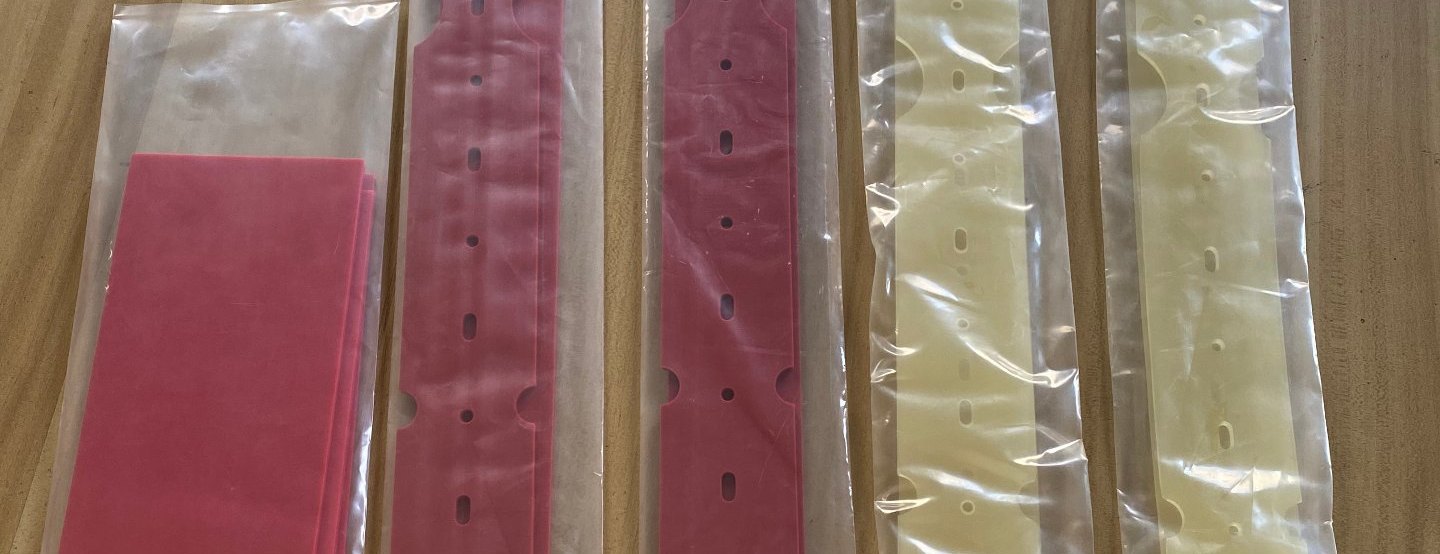
Material comparison
Two materials. One wrong choice per floor.
Both wear in two to three months under normal commercial use. The difference is how they fail, and on which floor they fail.
POLYURETHANE (PU)
Best forWorkshops, parking decks and warehouse concrete — anywhere oil, fuel or hydraulic fluid reaches the floor.
How it failsHardens in cold rooms and chatters on badly pitted floors, losing the seal at the edges first.
Why buy itHolds a sharp wiping edge longer under abrasive, oily conditions. The default for industrial sites.
GUM RUBBER
Best forCold storage, shopping malls, polished tile and epoxy — smooth, chilled or noise-sensitive floors.
How it failsSwells and degrades quickly when it sits in oil or fuel, so it is the wrong call for workshop duty.
Why buy itQuieter pickup and a better seal across uneven seams. Comfortable in chilled environments.
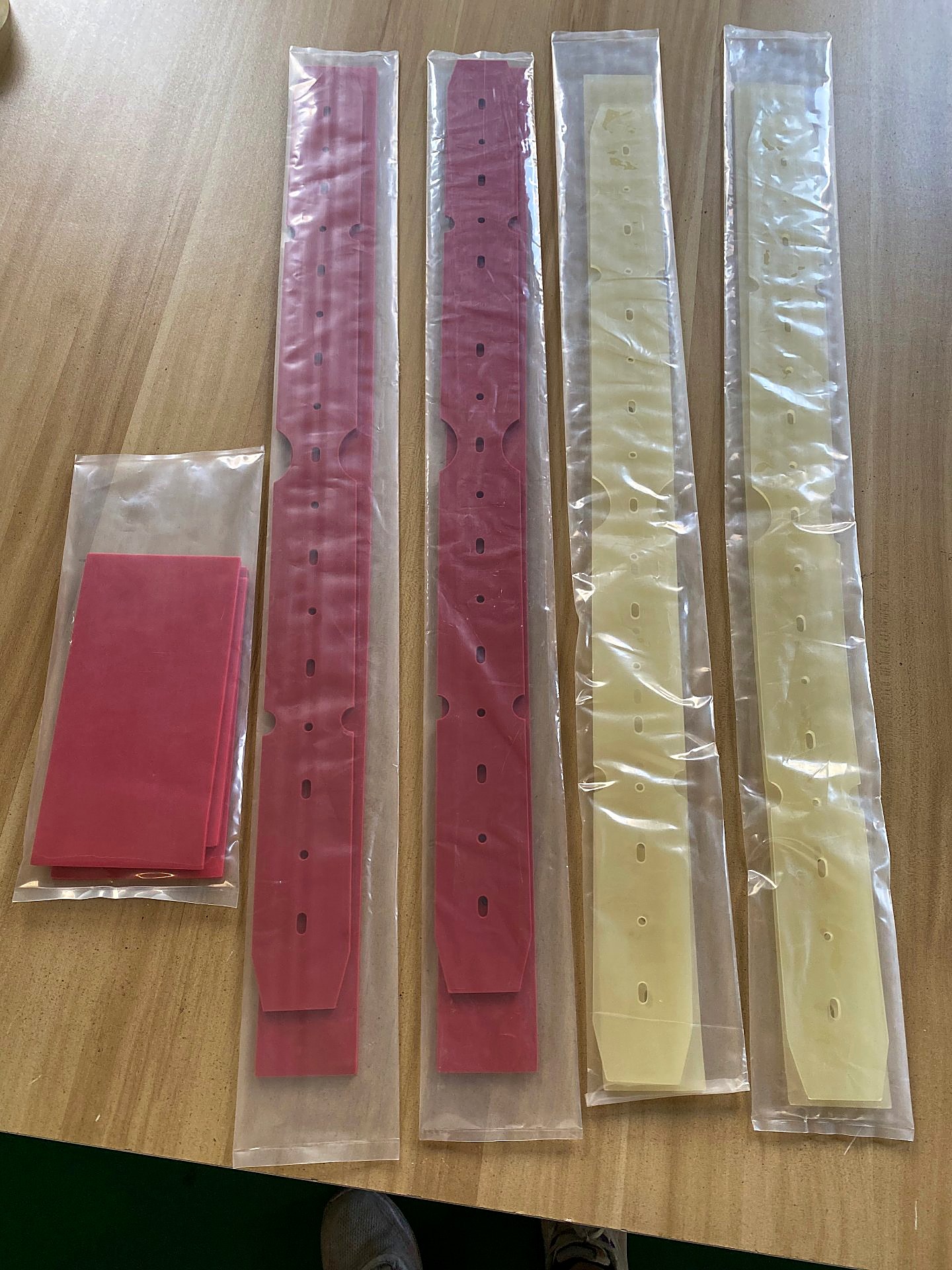
Three quick scenarios
Still unsure? Match the floor, not the price.
The material decision is about the site, not the invoice. These three cover most of the calls we take.
Greasy workshop floor
Oil, coolant or diesel film on concrete. Go PU — gum rubber swells within weeks and starts leaving streaks.
Cold store or food plant
Chilled floors and washdown regimes. Gum rubber stays flexible where PU hardens and loses its wiping edge.
Mall with glossy tile
Noise complaints and smooth surfaces. Gum rubber gives the quieter, tighter seal that shoppers and facility managers both notice.
From the production floor
“The buyer who sends us floor conditions instead of just a part number gets a blade that lasts. The other one gets the same complaint back in eight weeks.”
Material questions
What buyers ask before choosing a material.
How long do these blades really last?
Two to three months in normal commercial use. Oil, heat, rough floors and long daily runs shorten that, and we quote the realistic range for your site rather than a catalogue number.
Is there a price difference between PU and gum rubber?
PU usually carries a small premium. On oily floors it pays for itself, because you are not replacing a gum rubber blade twice as often.
Can I test both materials before ordering?
Yes. Many buyers run one PU and one gum rubber set on the same machine for two weeks before committing. Samples ship in 7-15 days.
Do both materials come in every profile?
Every profile we hold can be cut in either material. The 20-set minimum counts across the whole order, so you can split it between the two.
Go deeper before you commit
The full material breakdowns.
When the short version is not enough, these guides cover service life, hardness and real-world failure modes in detail.
Material comparison pillar
The complete side-by-side: Linatex, polyurethane and gum rubber across every floor type we supply.
Read guide →Gum rubber vs polyurethane
Head-to-head on wear rate, oil resistance and cost per cleaned hour.
Read guide →PU for oil and grease
Why polyurethane holds its wiping edge where natural rubber swells and fails.
Read guide →
Get it right the first time
Send the floor conditions. We’ll pick the material.
A photo of the site plus the machine model is enough. We come back with a material call, a price and a lead time.
Get a Material RecommendationPU and gum rubber in stock · Samples 7-15 days · 20-set MOQ