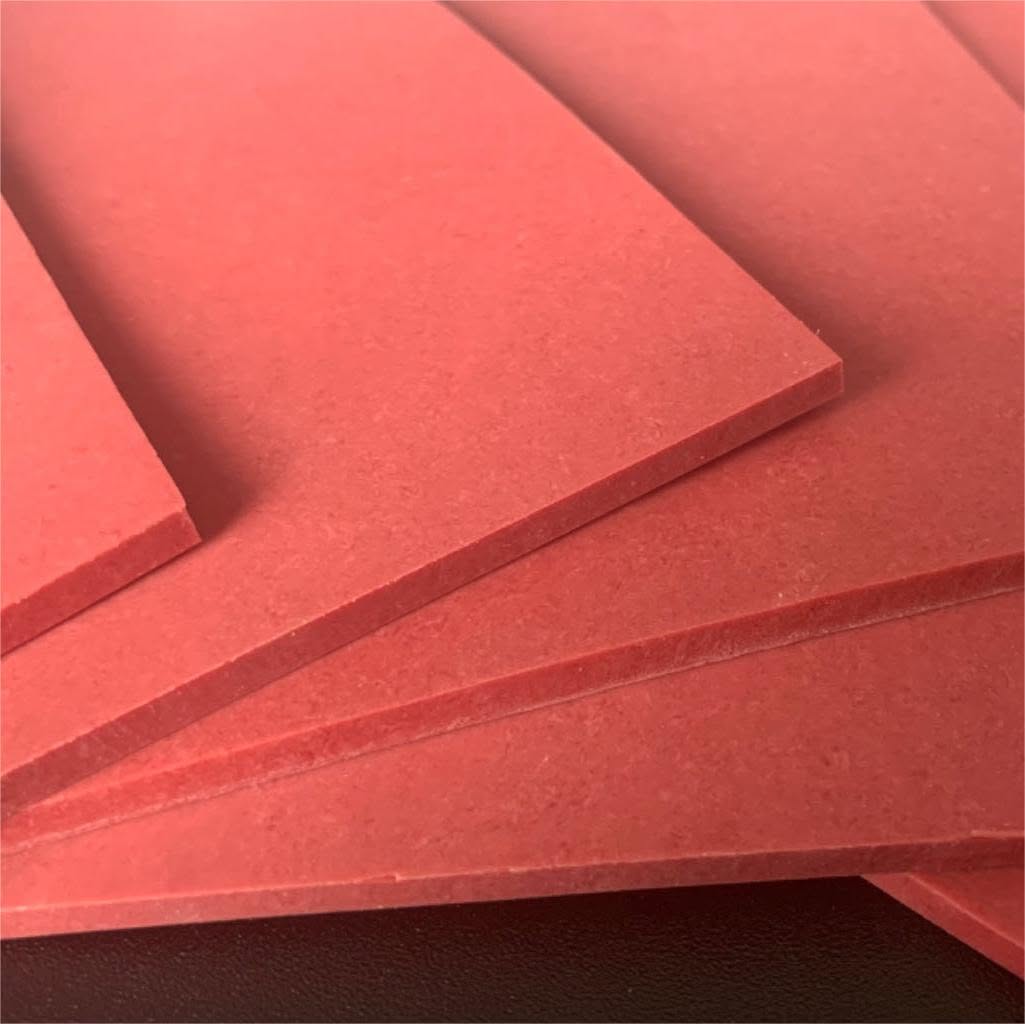
A chute that blocks costs more than a chute that wears out. Wear is gradual and predictable: it shows up on an inspection round and gets scheduled. Build-up stops the line without much warning, usually mid-shift, and the clearing work is hands-on, slow and unpleasant.
That gap explains why chute and hopper liners are so often specified badly. Buyers ask for the hardest, most abrasion-resistant sheet they can find, because abrasion is the failure they can see. Build-up is a different mechanism, and hardness does not fix it in the same direction.
Build-up and wear are two different problems
Wear is material leaving the liner: impact from lump, sliding abrasion from fines travelling across the surface, cutting and gouging from sharp material under pressure. Build-up is material arriving and staying: damp fines, clay-bearing ore, or anything with enough moisture to cake as it dries.
The two share a surface and compete for it. A harder compound resists being ground away, which is exactly what you want in sliding duty. But shedding depends on something else — resilience. A resilient surface deforms under each impact and springs back, and that small movement breaks the bond between the fines and the liner. Steel cannot do it, because steel deflects as a whole rather than locally.
There is a second reason rubber outperforms bare steel in sticky duty: corrosion. Once steel pits, the rust scale is rough, a rough surface holds material, and the material holds moisture, which roughens it further. Rubber does not corrode, so it never starts that loop. Lower surface energy relative to rusting steel is part of why rubber linings are widely used against sticky fines.
Before changing the compound, though, rule out geometry. No liner sheds material from a chute that is too shallow, from a ledge, or from a bolt head standing proud of the surface. If the hang-up always starts in the same place and that place is a transition or a fixing, the compound is not the variable.
Hardness: the usual mistake is going too hard
Hardness is quoted on the Shore A scale and tested by the ASTM D2240 durometer method. State the method in your enquiry — “60 durometer” on its own is not a specification you can reject against — and expect a realistic production tolerance of ±5 Shore A.
Our sheet programme runs three families:
- Natural rubber, 65 ± 5 Shore A — the default for chutes and hoppers. High resilience, good cut and tear resistance, absorbs impact energy, and sheds most damp fines without help.
- Cast polyurethane, 85 ± 5 Shore A — for fine, dry, high-velocity sliding abrasion where build-up is not the driving problem. It resists being ground away far better than rubber in that duty, and it is correspondingly more sensitive to temperature and operating conditions, so it needs a conversation rather than a straight substitution. In sticky duty its hardness does nothing for shedding.
- Economy gum rubber, 45 ± 5 Shore A — for light protection, dust curtains and low-wear areas where price decides. Too soft to survive an impact zone.
The working rule is to choose the softest compound that survives the dominant wear mechanism. Going harder than the duty requires buys wear life you may never consume and costs you the rebound that keeps the chute clear. The comparison logic is the same one we publish for squeegee stock, and it is set out with more test detail in our material comparison.
Thickness: put it where the energy is
A chute is not one duty. The impact zone, where the stream lands, and the sliding run below it wear by different mechanisms and rarely need the same section.
- Under 6 mm — light protection, curtains, sealing. Easy to cut and form by hand.
- 6–12 mm — the common working range for general chute and hopper lining.
- Above 12 mm — impact zones and anything taking large lump. Heavier to handle, usually needs mechanical fixing or bonding, and generally worth the extra cost per square metre because it is replaced less often.
Our sheet range runs 3 mm to 20 mm. Sections beyond that are normally handled as a moulded or fabricated part, and it is better to ask early than to discover it at the enquiry stage.
Two cautions. Thicker is not automatically better: in sliding-abrasion duty a thin, harder sheet frequently outlasts a thick, soft one, so thickness belongs where there is impact energy to absorb. And thickness creates steps — taper the upstream edge and shim transitions so nothing protrudes into the flow, because a step is a ledge and a ledge is where build-up starts.
Installation decides whether the specification survives
A correctly specified liner still fails early if it is fitted badly, and on a chute a poor fit causes blockages as often as it causes wear.
- Prepare the substrate properly. Steel must be clean, dry and profiled. Adhesive onto scale, rust or moisture is a failure with a date on it.
- Bond with primer plus a two-coat adhesive system, at the spread rate the adhesive maker specifies, with the correct open time before mating.
- Fix mechanically where load is real. Clamp bars or countersunk bolts at edges and in the impact zone. Do not ask adhesive alone to hold a liner against falling rock.
- Keep everything flush. A proud bolt head is a build-up starter. Countersink and cover.
- Shingle joints in the direction of flow. Lap downstream sheets over upstream ones so material passes across the seam instead of driving into it and lifting the sheet.
- Respect cure time. Putting the plant back early to save an hour costs more than the hour.
Liner work in or around operating plant sits under the site safety regime — in the US, MSHA requirements, published by the Mine Safety and Health Administration. Isolation, lock-out and confined-space procedures belong in the job plan before the sheet arrives, not after. For transfer points and belt-fed chutes specifically, the Conveyor Equipment Manufacturers Association publishes practical guidance on chute and sealing practice that is worth reading before you write a specification.
What to send us
The fastest enquiries include the application and the dominant mechanism, the material being handled with its moisture and top lump size, the drop height, the thickness and tolerance you need, the sheet or roll sizes, the durometer with test method, and the fixing method available on site. Photographs of the failed liner and of the chute geometry are more useful than a part number, because they show where the build-up starts.
If you are replacing an unknown sheet, send a sample. Measuring a liner that already works beats guessing from a catalogue, and where a dimension or property cannot be confirmed from your sample or drawing we will tell you rather than fill the gap with a number.
Our sheet terms match what we publish for squeegee stock: samples are charged rather than free, and take 7–15 days to prepare because they are made to your specification rather than pulled off a shelf. New profiles or cutting dies are USD 60–120 per profile, waived at 500 sets, and mixed orders are accepted with a USD 3,000 minimum. Claims are handled within 7 days of receipt, cover manufacturing defects only, replace only the defective pieces, require documentation from arrival, and leave freight on the buyer. More background on specifying sheet is in our mining rubber sheet guide, and cut-to-size, custom gauge and private-label options are covered on the red rubber sheet page.
Frequently Asked Questions
Will a harder liner stop material sticking?
Usually not. Shedding comes from resilience, not hardness. If build-up is the complaint, going harder often makes it worse while adding wear life you did not need.
How thick should a hopper liner be?
It depends on the drop. Start with the impact zone and step down through the sliding run rather than lining the whole surface at one gauge.
Can I line the whole chute in one grade?
You can, and many sites do. Expect to pay for it either in shortened life at the impact zone or in overspending on runs that never needed premium compound.
What service life should I expect?
There is no universal figure for chute liners — duty, moisture and lump size move it too far. Specify against an inspection interval instead. For reference, the squeegee blades we supply run typically two to three months, an industry figure rather than a guarantee, and polyurethane is more sensitive to temperature and operating conditions than natural rubber.
What if I cannot identify the existing sheet?
Send a piece. Thickness, hardness and a visual read of the wear pattern will usually narrow it to a grade.
Tell us where the build-up starts, what is being handled and what thickness you need, and we will recommend a grade, quote the sheet against a written specification, and send a sample piece you can put into service before committing to a full change-out.