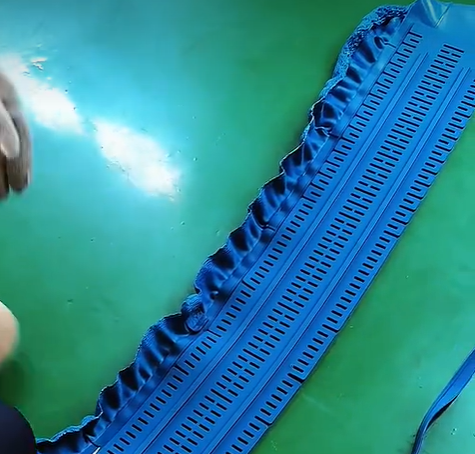
For commercial cleaning equipment distributors, janitorial supply companies, and floor scrubber repair shops, maintaining a robust supply of high-performance replacement parts is paramount. Among the most critical yet frequently replaced wear-and-tear components in the industrial cleaning industry are Karcher floor scrubber rubber squeegee blades.
Kärcher is a global giant in cleaning technology. Their walk-behind and ride-on floor scrubbers are widely deployed in airports, logistics hubs, manufacturing plants, and retail spaces. However, even the most advanced suction motor cannot dry a floor effectively if the squeegee blade is compromised. For B2B procurement managers, sourcing high-quality aftermarket alternatives that match OEM performance while lowering procurement costs is a highly effective way to increase bottom-line profit margins.
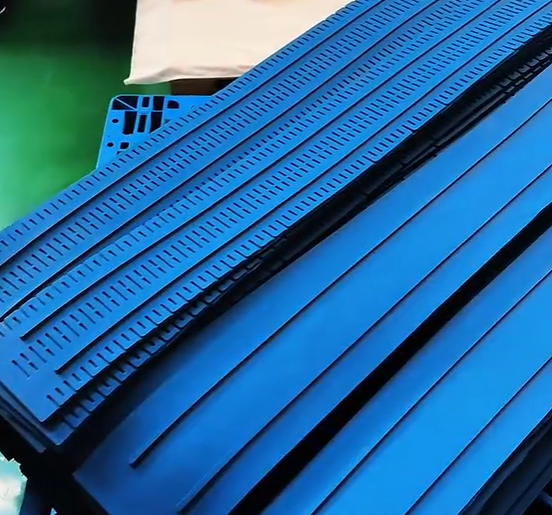
Understanding the Karcher Floor Scrubber Suction System
The suction system of a Karcher floor scrubber operates on differential pressure. As the scrub deck loosens dirt with water and detergents, the squeegee tool assembly at the rear seals against the floor. The vacuum motor draws air out of the recovery tank, creating a powerful airflow that pulls the wastewater through the squeegee channel and up into the tank via the vacuum hose.
The squeegee blades act as the mechanical seal in this process. If the blade fails to deflect correctly or shows signs of wear, ambient air leaks into the vacuum channel, destroying the pressure differential. This leaves streaks of dirty water behind, which creates immediate slip-and-fall hazards in commercial environments. Therefore, finding an exact 1:1 dimensional match to original Karcher specifications is not just about fit; it directly impacts operational safety.
In-Depth Analysis of Squeegee Blade Materials
2. In-Depth Analysis of Squeegee Blade Materials
Wholesale buyers must stock a diverse range of materials to meet the specific operational demands of their end-users. Squeegee blades are not “one-size-fits-all.” Using the wrong material can cause a blade to dissolve or tear within days.
| Material Feature | Natural Gum Rubber | Polyurethane (PU) | Linatex / Linard |
| Primary Advantage | Maximum flexibility & seal | Extreme oil & chemical resistance | Unmatched tear resistance |
| Best Surface | Smooth tile, polished concrete | Oily factory floors, automotive shops | Rough, uneven concrete |
| Cost Profile | Economical, high turnover | Mid-to-high tier, specialty product | Premium, long-life cycles |
Natural Gum Rubber: The Commercial Standard
Natural gum rubber is the most popular choice for everyday commercial applications. Derived from natural latex, these blades offer incredible elasticity. They conform seamlessly to minor floor imperfections, such as tile grout lines, ensuring a dry finish. They are ideal for schools, retail malls, and office complexes. However, gum rubber absorbs oils and greases. If exposed to petroleum-based substances, it will swell, warp, and lose its structural integrity rapidly.
Polyurethane (PU): The Heavy-Duty Industrial Solution
For environments like manufacturing facilities, food processing plants, and automotive workshops, polyurethane is mandatory. Our premium PU squeegee blades are highly resistant to chemicals, aliphatic hydrocarbons, and synthetic oils. PU exhibits exceptional abrasion resistance, making it suitable for rough, unpolished floors that would shred standard gum rubber.
How to Match Aftermarket Blades to Karcher OEM Specifications
One of the biggest headaches for B2B procurement managers is dealing with dimensional discrepancies from low-tier aftermarket suppliers. A millimeter difference in thickness or a slight offset in the mounting notch can prevent a technician from locking the blade into the squeegee frame.
When sourcing from NT.Heron, our engineering team utilizes precise 3D scanning technology to reverse-engineer original parts. When ordering, buyers should verify:
- The Machine Model Number: Common models include the Karcher BD 50/50, BR 55/40, or heavy-duty B 150 R ride-on series.
- The Squeegee Assembly Shape: Karcher utilizes both straight and curved (V-shaped or parabolic) squeegee frames. Parabolic frames require highly specific blade curvature to prevent puckering at the edges.
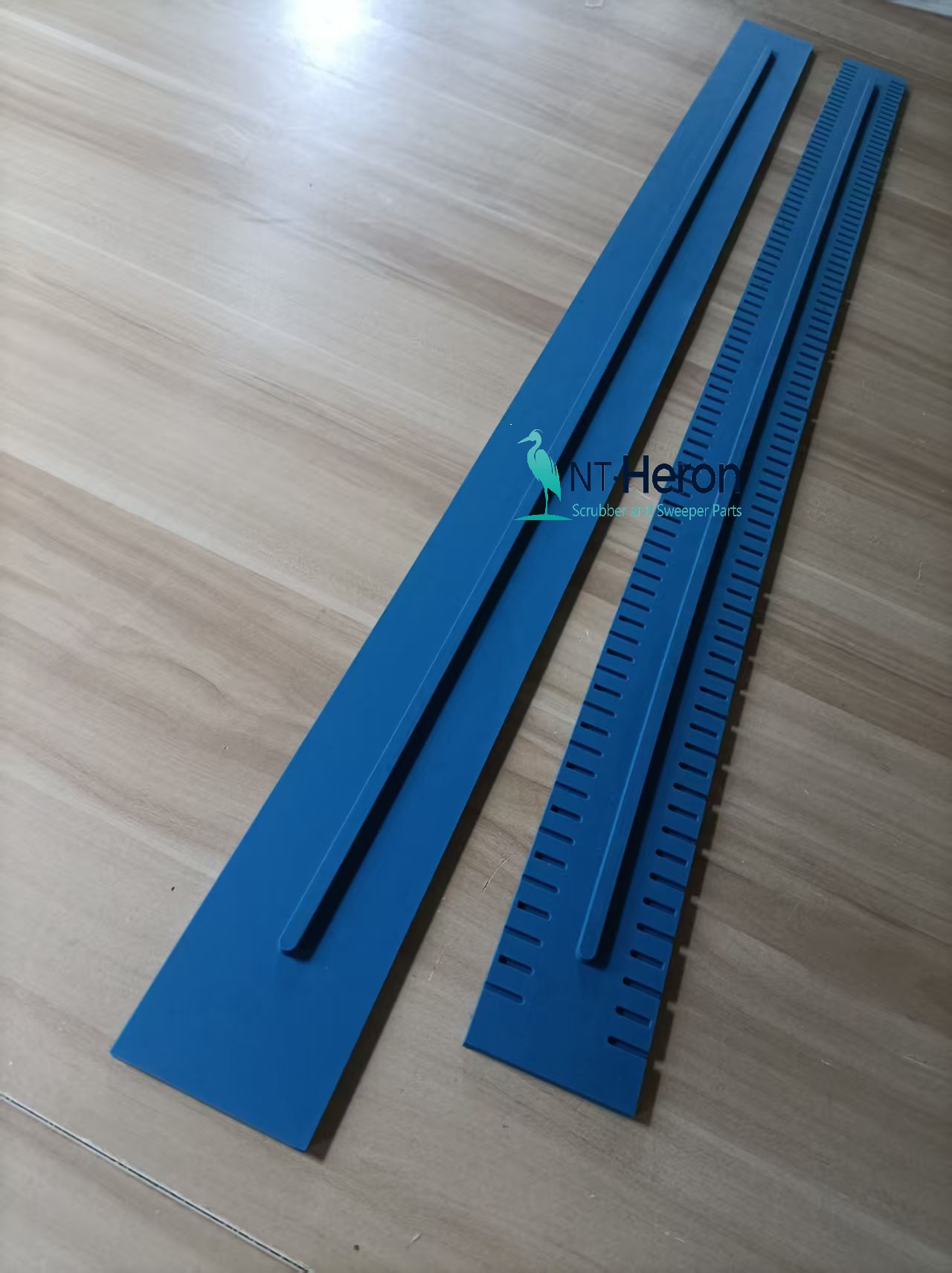
- The Part Numbers: Always cross-reference the OEM part numbers for the front (slotted) blade and rear (solid) blade.
For example, specialized components like our Blue Gum Rubber Squeegee Blades B530 are explicitly molded to match the specific tensile and structural requirements of high-demand Karcher models, guaranteeing a drop-in fit without field modifications.
Maximizing Supply Chain Efficiency with NT.Heron
Partnering directly with a dedicated manufacturer like NT.Heron offers distinct strategic advantages for global distributors over working with standard trading companies:
- Dynamic Molding Capabilities: We maintain over 50 custom molds specifically for Karcher-compatible parts, allowing us to rapidly scale production for high-volume orders.
- Low Minimum Order Quantities (MOQ): To help distributors test new local markets or add lines with minimal risk, we offer flexible MOQ structures starting at just 20 kits per model.
- Quality Control Protocols: Every batch of rubber and polyurethane undergoes strict shore hardness and tensile strength testing, aligning with global ISO and manufacturing benchmarks.
To build a more resilient product catalog, wholesale buyers frequently bundle their squeegee orders with other high-turnover replacement parts, such as flexible vacuum hose assemblies, robust vacuum cleaner motors, and non-marking scrubber wheels.
Learn more: High performance alternative introducing our new replacement mold for for karcher 90/160.